AI and language: Impacts of artificial intelligence on communication
Artificial intelligence is changing how we communicate. See what that means for language today, and where AI translation fits alongside human interpretation.
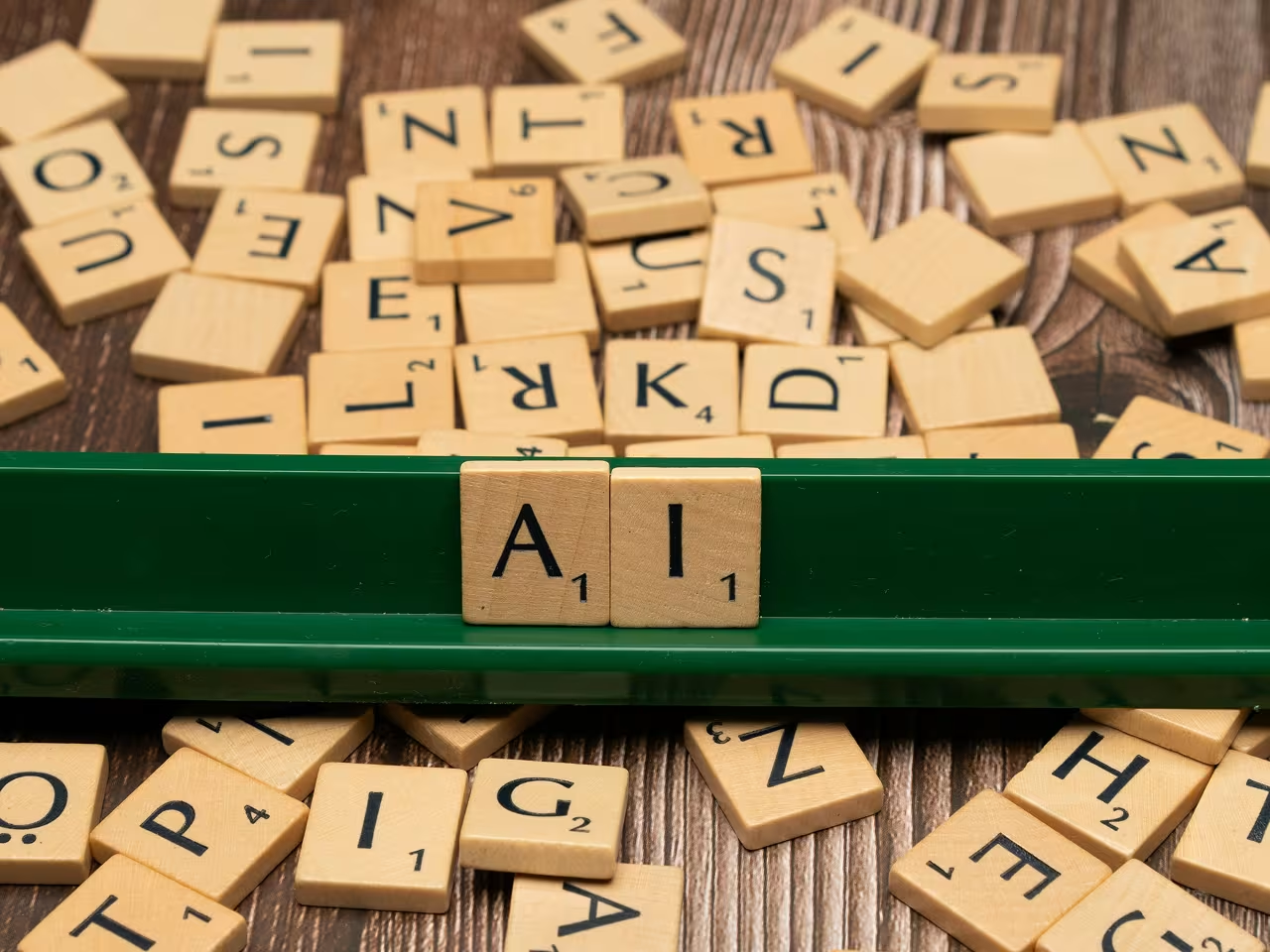
Human language is so unique that no other species can replicate how we communicate. That's why many of us are impressed by the rise of artificial intelligence and its subfield of natural language processing (NLP).
For a long time, computer scientists have been trying to build machines capable of true language interaction. Until recently, computers rarely produced coherent sentences - the results were often comic or gibberish. That's changed dramatically. Today, large language models and AI chatbots can hold fluent conversations, answer complex questions, and even translate speech in real time.
As a result, artificial intelligence is now deeply embedded in health, financial, and government institutions, and countless businesses rely on AI-powered tools to run their processes.
Artificial intelligence surrounds us every day, whether we notice it or not. Being so immersed in our lives, AI inevitably shapes our environment. For years now, many experts have voiced concerns about the negative influences of artificial intelligence. What gets discussed less often is how a technology that understands our language can, in turn, change how we use that language.
Today we'll look at how AI is impacting the evolution of language - and where it actually fits alongside human interpretation.
Evolution of language
To better understand the relationship between artificial intelligence and language, it's important to know how language evolved and why it's unique.
What makes the human language unique?
Language sets us apart from the rest of the animal kingdom, even from our closest relatives, the chimpanzees. There is no other communication observed among the beings on earth as complex and unique as human language.
Just think about it. We can express our thoughts by composing subjects, verbs, and objects. Moreover, we can recognize past, present, and future tenses. Not to mention how well we juggle subtext, tone, and emotion to give several meanings to the same word. We can also form an infinite number of sentences with the 20,000-35,000 words each of us typically knows.
Meanwhile, animals can only convey issues related to their survival: food, danger, threat, or reconciliation. They also can't express negation - stating what is not the case.
How did language evolve?
Animals mainly convey issues by making noises, such as crying out, hooting, or grunting. Some scientists believe that's what our human ancestors, known as hominids, did too. Then, they gradually developed a better means of communication, which turned into the complex language system we use today.
However, no one knows for a fact whether that was the case, so there are many theories about how human language started.
What we do know is that millions of years ago, our ancestors took a different turn in evolution compared to their relatives. Hominid and chimpanzee lines diverged. That's why chimpanzees never developed language - unlike hominids, their brains and the rest of their physiology hadn't changed much.
Some other theories suggest that early humans could use sounds resembling words or sign language. This view comes from the observation that chimpanzees can communicate with gestures.
Darwin suggested that our protolanguage was musical. According to him, before hominids learned to speak, they were singing - probably to maintain social bonds and soothe infants.
While there's no single theory of how early humans developed language, studies have shown where it most likely happened. The theory suggests that all languages evolved thousands of years ago from a language first spoken in Africa, and spread across the world when our ancestors migrated from Africa 70,000 years ago.
That's why today, we have hundreds of different languages with similar underlying qualities.
Changes in language
Language is like a living organism. It constantly develops to adjust to our changing needs, and the patterns of language continue to evolve even now.
Language change is driven by several factors, including:
- Contact with other languages. Speakers tend to adopt words from other languages.
- Effectiveness. Language is adjusted to convey thoughts with less effort.
- Trade and migration. Different groups of people influence each other's language after moving to different regions.
- Imprecise usage. Often, the incorrect or imprecise usage of certain language forms becomes the new standard.
- Analogy. Speakers tend to apply certain rules of words to unrelated other words.
- Prestige. Speakers may adopt language features that carry either negative or positive social prestige.
- Technology and new inventions. New types of technology create new vocabulary in every language.
As you can see, many aspects of our environment can drive language change. So it's fair to consider how a technology like artificial intelligence, which we now use constantly for communication, is already reshaping our language.
How artificial intelligence affects language and communication
The main difference between AI and human intelligence is that AI systems can absorb immense amounts of information quickly and efficiently. That makes AI software far stronger at grammar and vocabulary than the human brain, especially in unfamiliar languages.
The rise of artificial intelligence may mean fewer people attempt to learn a new language at all, relying instead on real-time machine translation and natural language processing. That shift matters more than it might seem, since our ability to learn the grammar of a new language holds up until around 17 and declines steadily after that.
Even so, the technology still isn't flawless.
AI has come a long way since it first entered everyday use. Modern language models handle humor, subtext, and context far better than early chatbots did, and can produce fluent, natural-sounding translations. But that's still not the same as a human interpreter picking up on tone, unspoken meaning, or cultural context in a live conversation - and for high-stakes situations, that gap still matters.
Machine translation can still default to plain, literal language that misses cultural nuance and idiom, especially with more indirect or figurative speech. Some worry that leaning on it too heavily could make us abandon the complex idioms in our own speech.
However, not all effects of artificial intelligence on our language are negative. AI used in business communication and brand compliance, for example, can respond to messages in line with a company's guidelines and help strip out negative tone before a message goes out.
That kind of nudge adds up. A study of smart replies, Google's among them, found that conversations using them took on a more positive emotional tone than conversations without them - and in the years since, that kind of AI-suggested phrasing has become a normal part of how many people write everyday messages.
On the other hand, people are pretty good at recognizing when a message is coming from an AI, and that doesn't always create positive feelings. Research on Airbnb host profiles found what its authors call a replicant effect: where profiles were a mix of human- and AI-written, the ones suspected of being written by AI were trusted less. Tellingly, when every profile was AI-generated, trust did not drop at all - what costs trust is being the suspected machine among humans, not the machine writing itself.
AI language tools are still relatively new, but the findings above show they're already shaping how we communicate - our social relationships, workplace communication, and everyday interactions with other people.
How can AI systems assist us?
Artificial intelligence still isn't a like-for-like substitute for a certified human interpreter, particularly in high-stakes or nuanced conversations. But it's no longer accurate to call it "not ready" - AI-powered translation is now a legitimate option in its own right for quicker calls, lower-stakes situations, and budget-conscious setups, alongside natural language processing tools that support communication more broadly. So what are some of the ways AI can actually help?
Preserving culture and breaking language barriers
One of AI's most significant achievements is breaking language barriers. While its comprehension still isn't perfect, AI can now translate and interpret speech in real time across 50 or more languages - the same kind of AI translation now built directly into meeting platforms like Interactio's own. That makes it far easier for non-English speakers to follow along in the language that still dominates global business and online content.
AI also helps us stay in touch with rarer languages. In one notable example, the founders of Masakhane, an NLP community based in Africa, used AI to help preserve and integrate thousands of African languages into technology that would otherwise leave them out entirely.
Higher value work
Workplace overload is nothing new, and it's an area where artificial intelligence can make a real difference - even though it's still far from flawless.
Technologies like voice assistants, virtual agents, and robotic process automation work alongside people to improve efficiency, taking on repetitive tasks and freeing employees to focus on more complex work and communication.
For example, AI and machine learning already help people working in finance, sales operations, and accounting by handling routine data analysis - the kind of work that doesn't call for human judgment - so people can spend their time on tasks that do.
In short
AI language tools haven't been around for long, but their wide use is already affecting how we communicate - in subtle ways, like changing how we write emails, and in bigger ways, like discouraging some people from learning a new language at all.
AI still has real limits. It's better at grammar and vocabulary than at picking up the subtext, tone, and cultural nuance a live conversation carries. That's exactly why certified human interpretation still matters for high-stakes conversations, even as AI translation becomes a genuinely useful option for lighter, faster, or lower-stakes situations.
AI is breaking down language barriers, and platforms like Interactio now build that capability directly into meetings and events through AI translation. But for conversations where nuance and precision are non-negotiable, a trustworthy human interpreter is still the one who preserves the language and everything underneath it. Enabled by remote simultaneous interpretation, interpreters allow people worldwide to connect virtually and engage in their own languages. Between the two, teams can match the right kind of interpretation to whatever a given moment actually needs.